Table of Contents
- Why Boosting Posts Is Not the Same as Running Facebook Ads
- What You Need Before You Start
- Step by Step: Setting Up Your First Facebook Ad Campaign
- Targeting: How to Reach Local NC Customers Specifically
- Ad Creative: What Actually Works for NC Local Businesses
- Rather Have a Professional Set This Up for Your NC Business?
- Setting a Realistic Budget for Your First NC Campaign
- How to Know If Your Facebook Ads Are Actually Working
- Common Beginner Mistakes That Waste Facebook Ad Budget
- Frequently Asked Questions About Facebook Ads for NC Businesses
- Ready to Run Facebook Ads That Actually Bring in NC Customers?
You boosted a post last month. You spent forty dollars. You watched the likes roll in.
Then nothing happened. No calls. No form submissions. No new customers.
Now you are wondering whether Facebook ads actually work or whether you just donated forty dollars to Meta.
Here is the truth: Facebook advertising absolutely works for NC small businesses. But what you did, boosting a post, is not the same as running a Facebook ad campaign. The distinction is where most business owners lose their budget before they ever actually start.
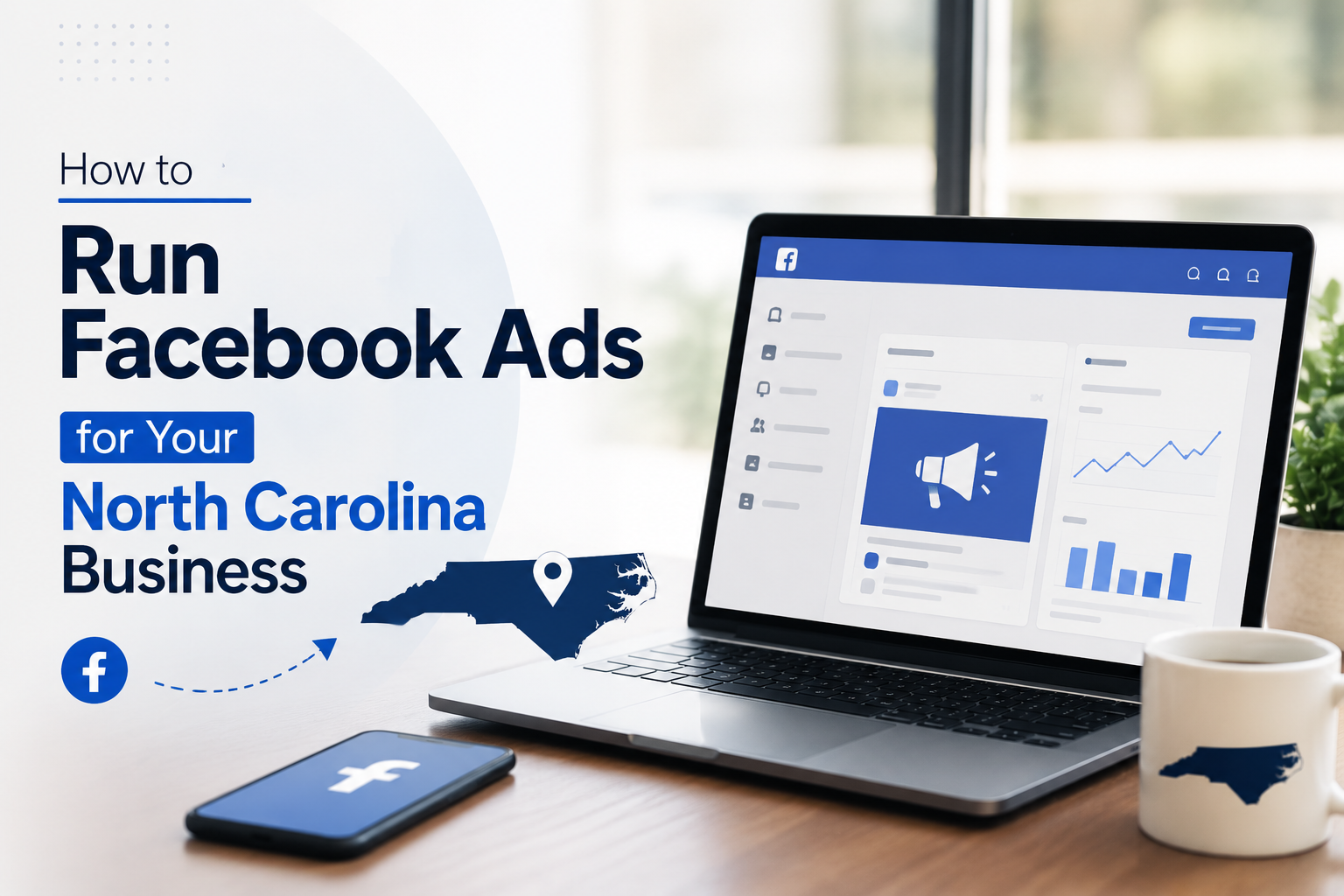
This guide explains exactly how to set up and run your first real Facebook ad campaign as a NC small business, from the right setup to targeting local customers to measuring whether any of it is working.
If you want a team that manages paid social campaigns for NC businesses every day, Tuff Digital Marketing’s social media marketing services cover Facebook advertising from strategy to execution.
Why Boosting Posts Is Not the Same as Running Facebook Ads
What a Boost Actually Does
A boosted post takes existing content from your Facebook page and pays to show it to more people. It is the fastest, simplest path to spending money on Facebook. It is also the least targeted, least measurable, and least conversion-focused option available.
When you boost a post, your targeting options are limited. Your ability to optimize for a specific outcome (phone calls, website visits, form submissions) is minimal. The people who see it may engage with it, like it, or scroll past it. Very few will take the specific action your business actually needs.
What a Real Facebook Ad Campaign Does Differently
A Facebook ad campaign built in Meta Ads Manager gives you precise control over who sees your ads, what action you are optimizing for, what your budget does hour by hour, and what data tells you whether it is working.
You can target people within 10 miles of Fayetteville who own homes and have shown interest in home services. You can optimize for phone calls rather than post likes. You can create multiple ad variations and let Meta show the best one. You can track exactly how many leads each dollar produced.
Why This Distinction Is Worth Understanding Before You Spend a Dollar
Every boosted post is budget that could have been a properly targeted campaign. For a NC small business with a limited marketing budget, that distinction matters enormously. Read the rest of this guide before you boost another post.
What You Need Before You Start
Before running Facebook ads, you need a Facebook Business Page for your business, a Meta Business Manager account that owns your ad account and page, and ideally the Facebook Pixel installed on your website to track visitor actions. These three elements are the foundation of every Facebook advertising campaign.
A Facebook Business Page
If you do not have a dedicated business page separate from your personal profile, create one first. Ads run from pages, not personal accounts. Your business page is also where your ad content is associated and where reviews, contact information, and business details live.
Meta Business Manager and Ad Account
Meta Business Manager (business.facebook.com) is the central hub that connects your page, ad account, and pixel in one place. If you have previously only boosted posts, you may not have a formal ad account set up yet. Create one inside Business Manager before building any campaigns.
The Facebook Pixel on Your Website
The Facebook Pixel is a small piece of code you install on your website that tracks what visitors do after clicking your ads. Without it, you cannot track website conversions, build custom audiences from your website visitors, or use Meta’s algorithm to optimize your campaign for the right outcomes.
Install the pixel before your first campaign goes live. Instructions are available inside Meta Business Manager under Events Manager. If your website is on a platform like Squarespace, Wix, or WordPress, the installation process is straightforward and does not require a developer for most setups.
Step by Step: Setting Up Your First Facebook Ad Campaign
Setting up a Facebook ad campaign involves four sequential steps in Meta Ads Manager: choosing your campaign objective, defining your ad set including audience, placement, and budget, setting your schedule, and creating the actual ad with copy and creative. Each layer builds on the one before it.
Step 1: Choose the Right Campaign Objective
Meta Ads Manager asks what you want your campaign to achieve. The most relevant objectives for NC local service businesses are:
- Leads: For collecting contact information through a native Facebook form or your website
- Traffic: For sending people to a specific page on your website
- Awareness: For reaching as many people as possible in a local area
For most NC service businesses running their first campaign, the Leads objective is the most direct path to measurable results. It optimizes delivery toward people most likely to complete a contact form rather than simply viewing the ad.
Step 2: Define Your Ad Set and Audience
This is where you define who sees your ads. Set your geographic targeting first since local reach is the entire point for most NC businesses. Then add age, interest, and demographic filters relevant to your customer profile.
Step 3: Set Your Budget and Schedule
Choose a daily or lifetime budget and set your campaign start and end dates. For a first campaign, a daily budget with no end date gives you the flexibility to pause when needed without the pressure of a countdown.
Step 4: Create Your Ad
Upload your image or video, write your headline and body copy, choose your call to action button, and select the destination URL or lead form. Keep it simple for your first campaign. One ad, one clear message, one specific call to action.
Targeting: How to Reach Local NC Customers Specifically
Facebook’s geographic targeting allows you to reach people within a specific radius around a city or zip code, making it ideal for NC local service businesses. Combine geographic targeting with relevant demographics and interests to narrow your audience to the people most likely to need your specific service in your specific area.
Geographic Targeting for NC Service Businesses
In the audience section of your ad set, set your location to the cities or zip codes you actually serve. For a Fayetteville-based business, you might target Fayetteville plus a 15-mile radius to capture surrounding communities including Hope Mills, Spring Lake, and nearby Fort Liberty-adjacent neighborhoods.
Do not target all of NC if you only serve Cumberland County. Broader targeting wastes budget on people you cannot serve. Narrower geographic focus improves your cost per result consistently.
Interest and Demographic Targeting in NC Markets
Layer interest and demographic targeting on top of your geographic selection. A home services business might target homeowners aged 30 to 65. A fitness business might target people interested in health and wellness. A business near Fort Liberty serving military families might layer in military-related interests and demographics.
The Pinehurst and Southern Pines area has a distinct demographic profile influenced by the golf resort community and retirement population. A business targeting that market would build a very different interest profile than one targeting the younger, family-heavy demographic near Fort Bragg.
Custom and Lookalike Audiences: When to Use Them
Once your pixel has collected data from website visitors or you have uploaded a customer list, you can create custom audiences (people who already know your business) and lookalike audiences (people who share characteristics with your existing customers).
These are more advanced targeting tools but worth knowing about for future campaigns. For a first campaign, start with interest and demographic targeting, then build toward custom and lookalike audiences as your data grows.
Ad Creative: What Actually Works for NC Local Businesses
Image vs Video: Which Performs Better for Local Service Businesses
Both work. The more important factor is quality and relevance. A clear, real photo of your work, your team, or your completed service consistently outperforms a generic stock image for local service businesses. A short video showing the before and after of a cleaning job, a completed renovation, or a yard transformation often generates strong engagement when production quality is reasonable.
For a first campaign, start with a strong real photo from your own work portfolio. It is faster to produce and easier to test multiple variations than video.
Writing Ad Copy That Connects With a NC Audience
Lead with the specific benefit or problem you solve. Be direct about what you offer and where. “Professional deep cleaning for Fayetteville homes” is stronger than “We offer cleaning services.” Include a clear local signal that tells the reader this is a business that actually serves their area.
Keep your primary text to two to three sentences maximum. Facebook users scroll fast. Your first sentence needs to earn the second.
The Call to Action That Drives Local Conversions
For service businesses, “Get a free quote” and “Call now” are the two highest-performing call to action options. Choose based on whether you want people to submit a form or call directly. If your business is better at closing over the phone, use a call objective. If your team handles leads through a form or booking system, use leads or traffic.
Rather Have a Professional Set This Up for Your NC Business?
Facebook Ads Manager has gotten significantly more complex over the past few years. The setup decisions made in the first few hours of a campaign shape everything that follows.
Tuff Digital Marketing manages paid social campaigns for NC businesses across Fayetteville, Lumberton, Pinehurst, and Pembroke. Call +1 910-802-0742 if you want a properly structured campaign from the start.
Setting a Realistic Budget for Your First NC Campaign
Most NC local service businesses need a minimum daily budget of $10 to $20 to generate enough delivery for meaningful results. This translates to $300 to $600 per month in ad spend. Less than $10 per day typically results in too little delivery to produce useful data or consistent leads in a local NC market.
Minimum Viable Budget for a Local NC Campaign
A $15 to $20 daily budget in a mid-sized NC market like Fayetteville or Lumberton generates enough impressions and clicks to start producing data within the first two weeks. Smaller budgets in less competitive markets can work at $10 per day. Very competitive categories like legal, medical, or home services in larger markets may need $25 to $40 per day to show consistently.
How to Scale Budget Based on Early Results
Run your initial campaign for at least 14 days before making significant changes or scaling the budget. Meta’s algorithm needs time to learn your audience and optimize delivery. If your cost per lead or cost per click is within acceptable range after the first two weeks, increase your daily budget by 20 to 30 percent at a time rather than doubling it overnight.
\
How to Know If Your Facebook Ads Are Actually Working
The Metrics That Matter for Local NC Businesses
Stop measuring success by likes and reach. The metrics that connect Facebook advertising to real business outcomes are:
- Cost per lead: What you paid per completed contact form or call
- Click-through rate: The percentage of people who saw your ad and clicked it
- Cost per click: What each website visit cost
- Return on ad spend: Revenue generated divided by total ad spend, if you can track it
A click-through rate above 1 percent is generally acceptable for local service campaigns. A cost per lead that is significantly lower than the value of a new customer is a profitable campaign worth scaling.
What to Do When the Numbers Are Not Moving
If your ad is running but generating no clicks, the audience targeting or ad creative likely needs adjustment. If you are getting clicks but no leads, the landing page is the problem. If you are getting leads but no conversions to customers, the follow-up process needs attention. Each failure point is different and diagnosable with the right data.
Common Beginner Mistakes That Waste Facebook Ad Budget
Targeting Too Broad or Too Narrow
An audience of 50 people is too small for Meta’s algorithm to optimize delivery. An audience of 5 million people means your ads are reaching far too many people who will never become your customers. For most NC local service businesses, a well-targeted local audience of 30,000 to 200,000 people hits the right balance.
Sending Traffic to the Wrong Page
Sending Facebook ad clicks to your homepage instead of a dedicated landing page is one of the most common and most expensive beginner mistakes. A homepage serves too many purposes for a visitor who clicked a specific ad. A landing page built around the specific promise of that ad converts at a significantly higher rate.
Our guide on website design and what actually converts visitors into customers covers what a converting landing page actually needs before paid traffic hits it.
Changing Campaigns Too Quickly
Meta’s algorithm needs 7 to 14 days and roughly 50 conversions to fully optimize delivery. Making major changes to targeting, budget, or creative before that learning phase completes resets the process and extends the time to efficient results. Patience during the learning phase consistently outperforms constant early adjustments.
Frequently Asked Questions About Facebook Ads for NC Businesses
How do I run Facebook ads for my small business?
Set up a Meta Business Manager account, create an ad account and connect your Facebook page, install the Facebook Pixel on your website, then build your first campaign in Ads Manager by choosing a campaign objective, defining your local NC audience, setting a daily budget, and creating your ad with a specific call to action.
What is the difference between boosting a post and running a Facebook ad?
Boosting a post pays to show existing page content to more people with limited targeting options. Running a Facebook ad campaign in Ads Manager gives you full control over audience targeting, campaign objectives, budget optimization, and conversion tracking. For local NC businesses trying to generate leads, Ads Manager campaigns consistently outperform boosted posts.
How much do Facebook ads cost for a small business in NC?
Most NC local service businesses need a minimum daily budget of $10 to $20 to generate meaningful results, or $300 to $600 per month in ad spend. Very competitive categories or larger markets may need $25 to $40 per day. The most important metric is not total spend but cost per lead relative to the value of a new customer.
How do I target local customers on Facebook in NC?
Use Facebook’s geographic targeting to set a radius around your city or service area in Meta Ads Manager. Layer demographic and interest targeting on top of geographic targeting to reach the specific type of customer most likely to need your service. Avoid targeting all of NC if you only serve a specific area.
How long before Facebook ads start working?
Meta’s ad algorithm typically needs 7 to 14 days and around 50 conversions to exit its learning phase and optimize delivery efficiently. Most campaigns begin generating clicks within the first few days but reach their best performance after two to four weeks of consistent running.
Can I run Facebook ads myself or should I hire an agency?
For simpler campaigns in less competitive markets, DIY Facebook advertising is manageable with the right setup. For competitive NC markets, multiple campaign types, or budgets above $1,000 per month, professional management typically produces better results than the time cost of learning Ads Manager independently.
Ready to Run Facebook Ads That Actually Bring in NC Customers?
Facebook advertising works for NC local businesses when it is set up correctly, targeted precisely, and given enough time and budget to produce meaningful data.
The businesses generating consistent leads from Facebook in Fayetteville, Lumberton, Pinehurst, and across North Carolina right now are not doing anything mysterious. They have campaigns structured correctly, audiences defined accurately, and landing pages built to convert the traffic those campaigns deliver.
Tuff Digital Marketing builds and manages Facebook and paid social campaigns for NC businesses that connect ad spend to actual customer acquisition rather than just impressions and likes.
Call us at +1 910-802-0742, find us on Google Maps, or explore our full digital marketing services for NC businesses to start the conversation.
Your next customer is already on Facebook. The question is whether your ads are reaching them.